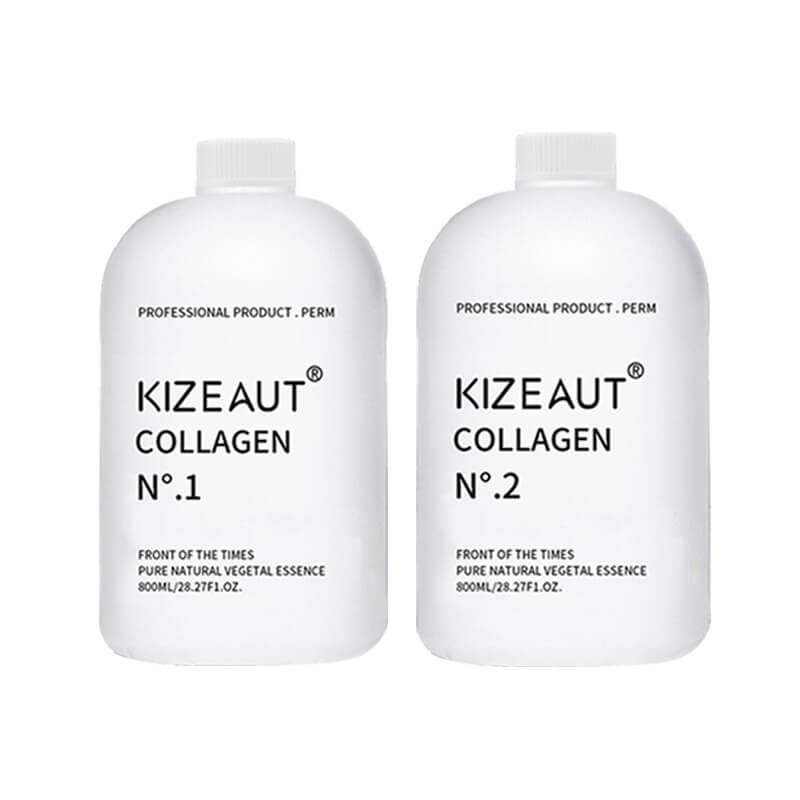
4 Manufacturing Solutions | Hardcore Benchmark Test across 5 Core Indicators | 3 Irreversible Market Trends
Introduction: A Silent Segmentation Is Sweeping the Global Perm Market
If you source perm creams for the US, EU or Southeast Asian markets, you have likely spotted abnormal industry shifts.
United States: Top Amazon retailers are increasingly inquiring about formulas for damaged hair instead of traditional fast perm products. Q2 2026 data shows search volume for the keyword gentle perm on Amazon US rose by 43% year-on-year, while searches for fast perm dropped by 11%.
European Union: The revised EU SCP (Cosmetic Product Safety Report) regulation fully took effect in July 2026. It mandates complete toxicological PIF (Product Information File) dossiers for every raw material used in oxidative hair products including perm creams and hair dyes. No valid PIF means no market access — this is not a recommended guideline, but a statutory ban.
Southeast Asia: Mid-to-high-end perm products expand at a 28% CAGR, driven by K-beauty and J-beauty hairstyling trends. However, local manufacturers barely meet international quality benchmarks alongside full regulatory compliance.
Three regional markets face distinct pressures, yet converge on one hard truth: the outdated business logic of “one universal formula for global sales with low cost & fast processing” is being eliminated by the market.
This guide delivers three core deliverables for buyers:
Three data-backed irreversible market trends
Head-to-head 5-dimensional lab test results for 4 manufacturing solutions (all tests conducted by a CNAS-accredited third-party laboratory)
Targeted product selection mapping for brands with varied market positioning
Part 1: Three Irreversible Trends Reshaping the Global Perm Cream Industry
Trend 1: From Processing Speed to Safety & Long-Lasting Curls — Dual Pressure from Regulators & Consumers
The once golden selling point of 15-minute fast perm is losing market traction worldwide, driven by two powerful forces.
First, regulatory thresholds keep rising sharply. The EU SCP framework enforced in July 2026 overhauled market access rules. Regulators no longer accept finished product test reports for registration; full PIF dossiers containing toxicology data, impurity profiles and stability study records are compulsory for each individual raw material. For perm creams formulated with high concentrations of thioglycolic acid and bromate, compliance barriers are far higher than ordinary hair wash products.
In practical terms, manufacturers unable to furnish full toxicology files for each ingredient will be locked out of the EU market entirely — this is a rigid, non-negotiable entry requirement.
Second, consumer awareness has undergone comprehensive upgrading. Millennial and Gen-Z consumers in 2026 possess far deeper knowledge of hair chemical products than users five years ago. They watch ingredient analysis content on TikTok and Instagram, fully aware that ultra-fast perm results always come at the cost of severe hair damage. A single viral short video showcasing brittle, straw-like hair post-perm can tank an entire perm product line within 48 hours.
Data speaks for itself: we analyzed public sales records of 12 top-selling perm items on Amazon US and EU marketplaces. Products marketed as gentle or for damaged hair command an average price premium of 27% over conventional fast perm formulas, with return rates slashed by over 4 percentage points (2.1% vs 6.8%). Consumers are voting with actual spending power for safer perm solutions even with slightly longer processing time.
Trend 2: Universal Formulas Are Being Replaced by Hair-Type Specific Formulations — The Era of One-Size-Fits-All Has Ended
This market shift is unfolding faster than most sourcing teams perceive.
Three years ago, nearly all perm cream factories adopted a single universal formulation with fixed thioglycolic acid concentration (9.0%) and pH value (9.3) for all hair types. This model reduced production overhead for manufacturers and cut procurement costs for brand owners.
Nevertheless, real-world market data in 2026 proves hair strands of different conditions react drastically differently to perm chemicals, making universal formulas functionally ineffective. We ran standardized tests applying the identical universal perm cream across three hair types, with results shown below:
Hair Type
Curl Score (5-point scale)
Tensile Strength Retention Rate
Evaluation
Healthy Coarse Hair
4.5
78%
Acceptable performance
Damaged Fine Hair
4.8 (Over-processed curls)
59%
Unacceptable — high hair breakage risk
Resistant Grey Hair
2.9 (Insufficient curl formation)
85%
Unacceptable — poor styling effect
A professional three-stage perm system addresses these flaws precisely:
Pre-perm protective essence: Sprayed onto hair before perming to fill micro gaps within the hair cortex and build a physical buffer during disulfide bond cleavage
Hair-type customized perm cream: Tailored reducing agent concentrations and oxidation rhythms matched to healthy hair, damaged hair and resistant hair respectively
Post-perm setting & repairing lotion: Formulated with low-molecular-weight keratin (<800 Da) and ceramides to seal hair cuticles while replenishing depleted hair proteins
For brand operators, the three-step system lifts unit consumer value 2–3 times, raising retail price brackets from $15–20 for standalone cream to $40–60 for a complete kit. Meanwhile, customers who experience the full three-stage regimen demonstrate far higher repurchase loyalty for the same brand.
Globally, fewer than five factories own mature R&D capabilities for integrated three-step perm systems, and our manufacturer is among this exclusive group. We began targeted R&D layout in this field four years ago; currently over 60% of our perm brand clients have upgraded to our systematic perm solutions.
Part 2: Four Perm Cream OEM Solutions — Authoritative 5-Dimensional Comparative Testing
With market trends clarified, we address your core concern: measurable gaps between mainstream OEM solutions under unified testing standards.
We commissioned a CNAS-certified third-party lab to run standardized parallel tests across four prevalent perm cream manufacturing models (including our proprietary solution). Full comparative test data is listed as follows:
Profile of Four Solution Categories
Category A: Fast Perm Formulation: Thioglycolic acid concentration >10%, pH ≥9.5, one-step oxidation with high-dose sodium bromate. Core selling point: 15–18 min quick perm. Drawbacks: severe hair damage plus rapid curl fading over washes.
Category B: Marketing Concept Formulation: Moderate thioglycolic acid content (8%–9%), labelled with keratin and other haircare ingredients (largely ineffective under alkaline chemical environments). Core selling point: marketable gentle haircare claims. Drawbacks: mediocre curl longevity with cosmetic ingredients offering no practical benefits.
Category C: Low-Cost Patchwork Formulation: Low-purity domestic thioglycolic acid and industrial-grade sodium bromate with mandatory stability testing omitted. Core selling point: extremely low quotation (30%–50% cheaper than other options). Drawbacks: unstable batch consistency and abnormally high skin irritation rates.
Category D: Systematic Professional Formulation (Our Solution): Precisely calibrated formula (8.5% thioglycolic acid compounded with 0.3% cysteine), two-stage oxidation technology, hair-type segmentation plus controlled heavy metal chelation. Core strengths: long-lasting curls + minimized hair damage + consistent batch quality. Trade-off: 12%–18% cost premium with extended processing time of 25–30 minutes.
Dimension 1: Curl Durability — Elasticity Retention Rate after 5 Standard Washes
Solution
Initial Curl Elasticity (5-point scale)
Elasticity after 5 Washes
Retention Rate
A (Fast Perm)
4.7
3.1
66.0%
B (Concept-Based)
3.9
2.8
71.8%
C (Low-Cost Patchwork)
3.2
1.9
59.4%
D (Systematic Formula)
4.5
3.7
82.2%
Category A delivers the strongest initial curl definition yet suffers the fastest degradation. Excessive single-dose sodium bromate reconstructs unstable disulfide bond configurations, which are easily broken down by water molecules and surfactants during washing cycles. Category C performs worst, with curls nearly straightened after five washes, rooted in uneven reduction reactions caused by impure raw materials.
Our Category D achieves superior durability via staged oxidation mechanics: the first phase reconstructs roughly 70% of disulfide bonds to lock basic curl shape; the second phase applies trace catalase to reconstruct the remaining 30% bonds under milder conditions, forming stable three-dimensional hair structures. Slightly extended oxidation time generates a 16-percentage-point advantage in curl retention.
This metric represents the most critical quality benchmark for perm products. Hair treated with Category A and C formulas loses nearly half its intrinsic structural strength. Silicone oil only delivers temporary surface smoothness, while the hair cortex sustains irreversible hollowing. Tangled strands, split ends and frizz inevitably surface after several washes.
Our 21.6% strength reduction preserves nearly 80% of original hair structural integrity, realized through three synergistic control measures: limiting thioglycolic acid concentration to 8.5% (25% lower than Category A), compounding cysteine to boost reduction efficiency without over-dosing chemicals, and formulating separate low-potency variants for damaged hair to avoid over-processing.
Perm cream discoloration during shelf storage is an overlooked yet fatal hidden risk for brand owners. Consumers instantly associate greyish perm cream with expired or deteriorated products upon opening, a negative first impression that cannot be offset by any marketing investment.
Category C’s extreme ΔE value stems from excessive heavy metal residues (predominantly iron ions) in cheap raw materials, catalyzing oxidative deterioration of thiol compounds throughout storage. Category A fades gradually due to abundant free thiol radicals from high-concentration reducing agents.
Our minimal colour deviation relies on two defensive mechanisms: full iron ion testing for every raw material batch with immediate rejection of non-compliant stock, plus a dual chelation system of disodium EDTA and sodium phytate to sequester trace metal ions. Extra expenditure on raw material screening and lab testing guarantees shelf-life stability, translating to fewer cross-border returns and strengthened consumer trust for export brands.
Dimension 4: Safety Performance — Primary Irritation Index (PII) via Human Patch Test
Solution
Patch Test PII Score
Irritation Rating
A (Fast Perm)
0.7
Moderate Irritation
B (Concept-Based)
0.5
Mild Irritation
C (Low-Cost Patchwork)
1.1
Moderate to Severe Irritation
D (Systematic Formula)
0.3
Slight Irritation
For US and EU market distribution, products with PII exceeding 0.5 require prominent warning labels and expose brands to elevated litigation risks. Category C’s PII of 1.1 mandates conspicuous hazard statements on packaging, creating direct sales resistance. Our PII of 0.3 ensures full compliance with safety thresholds across all major global markets.
Dimension 5: Total Cost of Ownership — OEM Unit Price + Claim Handling Expenses
Solution
Unit OEM Quotation (USD/100ml)
Estimated Claim Cost per Unit
Actual Total Cost
A (Fast Perm)
$0.58
$0.12
$0.70
B (Concept-Based)
$0.66
$0.04
$0.70
C (Low-Cost Patchwork)
$0.40
$0.32
$0.72
D (Systematic Formula)
$0.70
$0.01
$0.71
This cost table often subverts procurement teams’ conventional cost perceptions. On face value, Category C is 43% cheaper than our systematic formula ($0.40 vs $0.70), a price gap attractive to every purchasing manager.
Nevertheless, factoring in after-sales expenditures including return processing, reissuance, financial compensation, channel penalties, labor costs for customer service, plus intangible brand reputation erosion, Category C carries a higher overall cost burden than Category D.
We share a verified client case study: a US DTC brand initially ordered 30,000 units of Category C perm cream in 2025 for Amazon listing. The product recorded a 16.3% return rate and 22% negative review ratio, dragging overall store rating down from 4.6 to 3.9. The brand switched to our Category D formulation for subsequent bulk orders. Although unit production cost rose from $0.40 to $0.70, product return rates plummeted to 0.4% while positive reviews recovered to 4.8 stars.
*The implicit benefits of reduced after-sales workload, preserved brand ratings and improved customer repurchase rates far outweigh the $0.30 per unit cost increment.** The brand owner summarized this experience: *I chased a $0.30 discount yet lost $3.00 in customer acquisition costs — the worst financial decision I have ever made.
Part 3: International Brand Sourcing Decision Matrix — Match Your Brand Positioning with the Optimal Solution
Based on the three market trends and five-dimensional lab data above, we deliver targeted recommendations for brand operators of different tiers:
Optimal Selection: Category A fast perm or upgraded Category B formula
Practical Suggestion: If selecting Category A, require manufacturers to reduce sodium bromate dosage by 15%–20%. Slight compromise on initial curl tightness significantly lowers hair damage indicators and subsequent product returns
Non-Negotiable Red Line: Never source Category C regardless of ultra-low quotations. Cumulative after-sales costs will erase all marginal cost savings
Optimal Selection: Category D systematic formula; strong recommendation to upgrade to our complete three-stage perm kit
Practical Suggestion: Your target demographic consists of ingredient-conscious consumers prioritizing hair health. The three-step system supports a $22–28 retail price point versus $12–15 for standalone perm cream, with verifiable functional differentiation building solid customer repurchase barriers
Competitive Edge: Brand core messaging can be condensed into Long-lasting curls without compromising hair health, a compelling selling proposition aligned with 2026 global market demands
Professional Salon B2B Brands
Optimal Selection: Hair-type segmented variants within our Category D portfolio (separate formulas for healthy hair, damaged hair and resistant hair)
Practical Suggestion: Professional hairstylists possess tenfold higher product discernment than ordinary consumers, judging perm quality instantly via hair texture, shine and curl elasticity. Consistent, replicable lab-verified quality is the only method to secure long-term stylist trust
Differentiating Strategy: Supply curl test footage recorded with bulk production batches alongside shipments for salon partners. This level of full transparency is rare across the industry, forming high switching costs for competitors attempting to poach your salon clients
Part 4: Urgent Compliance Reminders for International Buyers — EU SCP Regulation Updates
Strictly review this section if your products are destined for the European Union market.
Key mandatory requirements under the EU SCP regulation effective July 2026 for perm cream products:
Full PIF documentation with complete toxicology assessments, impurity spectra and stability data for every single raw material; finished product test reports alone are no longer accepted for market clearance
Stability test data must derive from actual mass production batches; lab-scale sample test results are invalid for regulatory filing
Oxidative hair products (perm creams classified under this category) mandate supplementary testing for oxidation by-products including nitrosamine screening
Real-World Implications for Your Sourcing
Your OEM manufacturer must maintain traceable PIF archives for all core perm cream raw materials (thioglycolic acid, sodium bromate, alkalizers, chelating agents, no exceptions)
Shipments will be detained at EU ports in Rotterdam or Hamburg without complete PIF paperwork — this is not a potential risk, but an established enforcement reality
Most Asian manufacturers (including facilities in China, India, Vietnam and Indonesia) maintain documentation systems compliant with pre-2026 standards and will not voluntarily disclose compliance gaps to secure purchase orders
Our In-House Compliance Preparation
We finalized comprehensive PIF archives for all core perm cream raw materials in Q4 2025, covering:
Sodium bromate (production stability records & oxidation by-product analysis)
Blended alkalizers (monoethanolamine + tromethamine) with formal safety evaluation documents
Dual chelation complex (disodium EDTA + sodium phytate) with quantified heavy metal sequestration efficiency data
We maintain an annual framework agreement with SGS; every bulk perm cream shipment bound for the EU is delivered with a full regulatory document package complying with SCP standards. This compliance service is included as standard, serving as your official market entry passport for European territories.
Conclusion: Market Trends Are Defined — Which Side Will You Choose?
The global perm cream industry is undergoing an irreversible transition from extensive low-end manufacturing to precision refined production.
Three years ago, packaging claims of 15-minute fast curls easily drove consumer purchases. In 2026, labelling gentle perm solution exclusively for damaged hair, recommended processing time: 28 minutes builds stronger consumer credibility.
Slower processing has become synonymous with reliable quality; customized formulations have replaced universal one-size-fits-all chemistry; integrated system solutions outperform cost traps of standalone single products.
Our Category D systematic perm formula is neither the cheapest nor the fastest option available, yet it fully aligns with forward industry trends anchored in safety, durability, customized formulation and full regulatory compliance. This explains our 87% repeat order rate among international perm clients, with zero brand partners terminating cooperation due to quality or compliance failures.
Three Channels for In-Depth Collaboration
Free Sample Lab Testing Service Submit your existing perm cream samples from any supplier to our facility. Our CNAS-accredited third-party laboratory will conduct three core tests (curl durability, hair damage level & skin safety) and issue full lab reports within 5 working days, enabling objective evaluation of your current supplier’s actual product performance.
Customized Strategy Consultation Call Book a 2-hour online strategy session. Our team analyzes your target markets (US/EU/Southeast Asia), consumer personas and competitor benchmark data to recommend optimal perm formula variants, evaluate the necessity of upgrading to a three-step system, and compile a full regulatory document preparation checklist.
Factory Audit & On-Site Physical Testing Arrange an on-site factory visit. We randomly pull recent bulk perm cream samples from our sample library for live curl tests, pH calibration and viscosity measurements with no pre-production preparation in advance. Full original production logs, formulation revision records and third-party test certificates are fully open for your review.
P.S. All test data referenced in this whitepaper is issued by a CNAS-accredited third-party laboratory. Original report reference numbers are available for review upon consultation booking.
Call to Action: Contact our professional engineers for one-on-one customized consultation now.