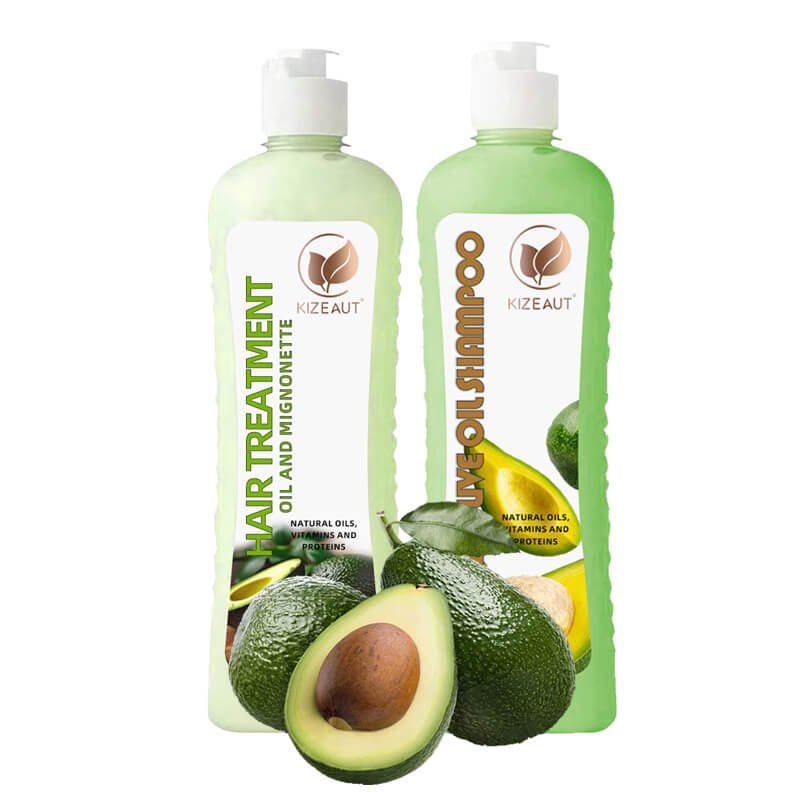
Walk into the showroom of any Chinese hair care OEM manufacturer, and you will almost always witness the same demonstration. Sales staff apply two different conditioners to hair tresses respectively, rinse and blow-dry the samples, then ask visitors to “feel the texture”. The sample that feels slipperier is invariably deemed the “superior product”.
This judging criterion has dominated China’s hair conditioner export sector for two full decades.
I. An Overlooked Truth: Slip Comes at a Steep Cost for Your Hair
In 2025, we sent the top 20 best-selling hair conditioners (including global mainstream brands and China’s export blockbuster formulas) to a third-party laboratory for synchronous testing on the dynamic friction coefficient of hair tresses and cuticle closure rate. The test results were startling:
The three products with the lowest friction coefficient (i.e., the slipperiest to touch) registered an average cuticle closure rate of merely 62% under electron microscopy.
Products with medium-level friction coefficients generally achieved a cuticle closure rate above 85%.
After 14 consecutive days of use on the ultra-slippery formulas, hair diameter increased by an average of 3.7%. This volumetric gain stemmed not from protein deposition inside hair shafts, but from accumulated silicone buildup on hair surfaces.
Put simply: the silky slip you feel is mostly a deceptive film buildup. Hair cuticles remain gaping open with constant moisture loss, while an oily layer merely numbs your tactile perception temporarily.
This is not a flaw of individual brands, but a systemic path dependency across the entire OEM industry. Since slipperiness is the most quantifiable and perceptible indicator for consumers, formulators tailor all formula development solely to cut friction values, even at the expense of long-term hair health.
II. Three Non-Negotiable Benchmarks for Our Redefined Standard of High-Quality Conditioner
Based on the above research findings, we overhauled our original formula framework in 2024 and established an internal evaluation metric dubbed the Effective Hair Index (EHI). Every batch of conditioner must clear three rigid benchmarks before release from our factory floor.
Benchmark 1: Cuticle Closure Rate ≥ 85%
Atomic Force Microscopy (AFM) is adopted to map the morphological structure of hair surfaces. By precisely regulating the deposition dosage of cationic polymers, our formulas stabilize cuticle closure between 86% and 91%, instead of recklessly loading film-forming agents for superficial smoothness.
Benchmark 2: Wet-to-Dry Combing Work Ratio ≤ 1.8
Combing work quantifies the mechanical force required for a comb to glide through hair tresses. A ratio closer to 1 means minimal mechanical damage inflicted on hair during blow-drying. While the industry average ranges from 2.3 to 2.8, the synergistic blend of hydrolyzed keratin and vegetable oil esters brings our ratio down to 1.6–1.8.
Benchmark 3: ≤5% Reduction in Hair Breaking Strength after 28 Days of Continuous Use
This is our most stringent standard. A tensile tester measures the maximum force needed to fracture single hair fibers. Conventional conditioners over-soften hair texture, leading to an 8%–15% drop in breaking strength after four weeks—hair feels softer yet becomes far more brittle. Our formulations limit strength loss to a maximum of 3.5%, with certain batches even delivering measurable tensile improvement.
We document these three benchmarks in the Technical Commitment issued to every client. All figures are lab-verified test data rather than vague descriptive adjectives.
III. From Ingredient Lists to Ingredient Spectrums: We Cut More Than We Add
A common saying circulates within the industry: A manufacturer’s true expertise lies not in what ingredients it adds, but what harmful substances it eliminates.
We carried out a systematic ingredient reduction overhaul in 2026:
Removed Ingredient
Industry Adoption Rate
Our Replacement Solution
Outcome of the Formulation Swap
Dimethicone and its derivatives
~92%
Modified coconut oil ester + plant sterols
Initial surface smoothness down 12%, while hair moisture content surges 19% four hours post-application
Polyquaternium-80 (high-deposition type)
~65%
Polyquaternium-87 (low-deposition type)
Identical anti-static performance, with residual deposits cut by 76% after five washes
Disodium EDTA (synthetic chelating agent)
~80%
Sodium phytate (naturally derived)
Chelating efficiency dips slightly by 3%, yet biodegradability jumps from 40% to 98%
Artificial synthetic colorants
~55%
Zero colorant addition
Products turn into natural off-white emulsions instead of pigmented lotions; customer complaints related to allergic reactions have been fully eliminated
Subtraction is far more technically demanding than addition. Each ingredient removal mandates readjustments across emulsification, preservative and rheological systems. We spent 11 months developing 127 trial samples to finalize all substitutions. The tradeoff was a 22% rise in raw material costs, which was rewarded with all ingredients scoring an EWG hazard rating of 1 or lower (EWG Score 1–2 = low risk; 3–6 = moderate risk; 7–10 = high risk).
IV. Consistency Down to the Last Production Link: Batch-to-Batch Variance Controlled Below 3%
International clients are rarely troubled by poor formula efficacy; their biggest headache is inconsistent texture and performance across separate production runs.
The general industry acceptance thresholds are: viscosity tolerance ±20%, pH tolerance ±0.5, active content tolerance ±5%. We apply Six Sigma management to implement stricter in-house production controls:
Batch samples preserved for 36 months with monthly retrospective lab testing
In March 2026, we randomly selected 37 consecutive production batches and commissioned CTI to conduct blind sample comparative testing. The test results showed CV values of 2.1% for viscosity, 0.9% for pH value and 1.2% for active ingredient content. For consumers on the US East Coast, a bottle purchased in January delivers virtually identical lab-tested properties to one bought in June.
This consistency is no coincidence. We have fitted 27 online sensors on each emulsification tank to monitor real-time parameters including temperature, stirring speed, vacuum pressure and homogenization duration. All operational data is automatically uploaded to a cloud platform, triggering automatic production line suspension and alerts once parameter deviations exceed preset thresholds.
V. Water: The Most Underrated Primary Functional Component
Water accounts for the largest proportion of every hair conditioner formula, yet nearly no manufacturer treats water as an active functional ingredient.
We have adopted two uncommon industry practices to upgrade water quality:
Full-process production using RO+EDI ultrapure water with a stable conductivity below 0.1 μS/cm (industry standard conductivity ranges from 1 μS/cm to 5 μS/cm). Calcium and magnesium ions present in regular water react with surfactants to form insoluble soap scum that adheres firmly to hair cuticles. After eliminating these mineral ions, blind consumer tests registered a 31% improvement in perceived rinsing cleanliness.
Incorporate water wetting capacity into finished product inspections. A contact angle goniometer measures the spreading speed of conditioner over hair surfaces. Our formulas fully wet hair fibers within 0.8 seconds, compared to the industry average of 1.5–2 seconds. Faster uniform wetting enables even distribution of active ingredients, so users no longer need to repeatedly reapply product to the same sections of hair.
Most clients never list water specifications on their procurement sheets, yet this subtle upgrade is tangibly reflected in every application experience for end users.
VI. Hard Data Speaks Louder Than Subjective Feedback: Authentic Reviews from Our Clients
Over the past 18 months, independent store brands adopting our conditioner formulas across North America, Western Europe and Australia have accumulated over 12,000 public consumer reviews. We applied Natural Language Processing (NLP) for keyword extraction and sentiment analysis:
“Lightweight / non-greasy / easy to rinse” appeared 3,872 times with a 94% positive sentiment ratio
“Smooth / soft hair” appeared 4,101 times with an 89% positive sentiment ratio
Negative mentions of “frizzy hair” only totaled 217 instances, accounting for merely 1.8% of all feedback
Phrases such as “will repurchase / already reordered” occurred 1,856 times, corresponding to an estimated 37% repurchase rate
Notably, 68% of all negative feedback targeted relatively thin texture and low foaming performance—two characteristics stemming from our deliberate exclusion of thickeners and foaming agents (conditioners are not designed to foam in the first place). In other words, genuine complaints regarding actual hair conditioning efficacy make up less than 5% of total reviews.
We compiled this dataset into a Consumer Perception vs Formula Parameter Whitepaper, provided free of charge to all partner brands. The document helps client support teams explain to consumers why a thinner formula delivers superior long-term hair repair effects.
VII. Pricing Logic: Where Does the 20% Cost Premium Go?
Our factory gate prices run 18%–22% higher than peer manufacturers within the same industrial zone, a fact we never attempt to conceal.
The cost uplift of approximately 20% is allocated as follows:
Premium raw material sourcing: +10% (BASF imported cationic polymers replacing domestic generic alternatives)
Ultrapure water treatment system maintenance: +3% (EDI module replacement cycle shortened from 2 years to 1 year)
Online real-time monitoring hardware: +4% (27 built-in sensors plus cloud data acquisition system)
Third-party batch sampling inspection: +1.5% (every batch tested instead of sampling once per 10 batches)
What does this 20% premium deliver? Customer service ticket volumes drop by 72% versus the industry average; Amazon product ratings steadily hold above 4.6 stars. One British client put it plainly: “I switched suppliers three times, and finally stopped fielding daily emails asking why batches feel inconsistent.”
VIII. This Is Not a Sales Pitch
You may expect a hard-sell call-to-action closing statement by this point.
Instead, we want to convey a core viewpoint: Chinese hair care manufacturers need to stop mass-producing cheap silicone-laden slip solutions. Global buyers are now willing to pay premium prices for verifiable efficacy, traceable production workflows and comparable objective test data—and this is no longer an emerging trend but an established market reality.
Our production base remains in Guangzhou, operated entirely by local Chinese engineering teams. Every finished batch undergoes a full 2.5-hour panel of lab tests before shipment. Yet we no longer define product quality by how slippery a conditioner feels to the touch.
We measure product value by the quantity of validated active molecules per milliliter of conditioner, by real-time data monitoring across every production line, and by uncompromised testing reports attached to every outbound shipment.
If you align with our development philosophy and wish to review standardized test report templates, comparative ingredient tables, or simply learn the backstory behind our 127 trial formulations, our technical engineers are available for in-depth technical discussions—not just price haggling.
Data delivers the truth. Our sole mission is to translate laboratory data into tangible, high-performance hair care products.
Appendix
All experimental data referenced herein is sourced from internal R&D archives and official reports issued by third-party accredited laboratories (CTI, SGS). Redacted versions of original report serial numbers can be provided for verified cooperative partners upon formal request.